

Without a doubt, the most powerful tool for rewards is Credit Card spending, sign-up bonuses, and retention offers. While restaurant reward programs, airline loyalty programs, and shopping portals can all provide outstanding returns, the foundation of any rewards strategy will always be built on strategic credit card usage.
There are several different strategies for what cards a person should use to maximize their rewards based on priorities. The accumulation of maximum points, building airline or hotel loyalty status and earning bonus perks (like free hotel nights) are all possible motivations that could impact a person’s credit card strategy. Some people focus on a card set up based solely on what card earns the highest rewards in a category (dining, gas, etc.) and carry cards issued by different banks solely based on maximum earnings. Others prefer a “trifecta” of three or more cards from a single issuer (American Express, Chase, etc.), choosing cards that earn the same currency from the same bank (points or miles) with different multipliers is specific spending categories.
For the first quarter of 2023, I will be focusing on earning airline status while striving to maximize reward points across multiple providers/currencies. The cards I’m currently using are:

215n/4I6BTYGN14
Disclaimer: Some of the card links and
other products that appear on this
website are from companies from which
The Rewards Master will earn an affiliate
commission or referral bonus.
United Quest Card by Chase.
The Quest card is the mid-tier offering in the Chase United card lineup. The Quest card has a $250 annual fee which is offset by a $125 United airlines credit which can be used for airfare or incidentals. The current sign-up bonus is 80,000 miles after spending $5,000 in the first three months after account opening. The card’s reward offerings are as follows:
3x miles on United purchases
2x miles on other travel purchases, dining, and streaming services
1x miles on other purchases
The Quest card includes several status-like benefits including a credit for TSA pre-check and global entry, priority boarding, and free first and second-checked bags. These are nice perks but mostly redundant for me as I am a United Premier Platinum status holder and therefore enjoy enhanced benefits beyond those. The primary reason I keep the Quest card at the top of my wallet is the 500 pqp (Premier Qualifying Points) I receive per $12,000 of spending on the card, up to a maximum of 6,000 pqp annually, as the card in a major part of my strategy to retain United status. I will use this card for general spending, along with the second card in my line-up, earning one mile per dollar to build up my pqp until I reach my target spending.
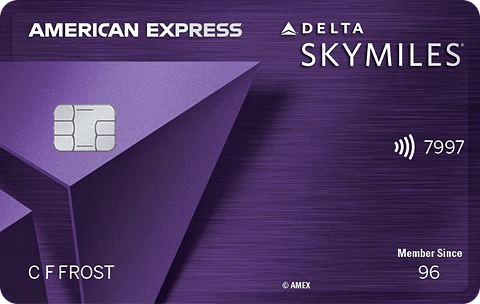
Delta Reserve Card by American Express
The Delta Reserve Card by American Express is the newest in my lineup and was added so that I could quickly qualify for Delta Medallion Status. The multipliers on the card leave much to be desired – only 3x miles per dollar for Delta purchases and 1x miles per dollar on all other spending. The card has a massive $550 annual fee and awards 50,000 Delta miles after spending $6,000 in the first six months after account opening. Similar perks to the United Quest card like free checked bags and credits of Global Entry or TSA Precheck are also included. After the first year, the card’s true super-power comes into effect, as the cardholder will receive a companion certificate for one free (not including taxes and fees) companion ticket for the main cabin, Comfort+, or First-Class ticket within the continental United States (with some limitations and restrictions).
The Delta Reserve card holds the second to top spot in my wallet due to its ability to fast-track Delta Medallion status. After spending $25,000 per year the cardholder receives a waiver on the MQD portion of Delta’s Medallion qualification requirements and a 15,000 bonus or Medallion Qualification Miles (MQMs) after spending $30,000. Another tremendous benefit of the card is one of the best airline lounge access policies in the credit card game. Cardholders receive admission to Delta Skyclub, American Express Centurion lounges, and Escape lounges when traveling on the same day, Delta ticketed flights.
Although I’ve been a long-time United flyer, I’ve been impressed with Delta’s product and intend to split my work and leisure flights this year between the two carriers to earn status on both. I will evaluate my flight experience with both and determine where to focus my efforts in 2024 and beyond.
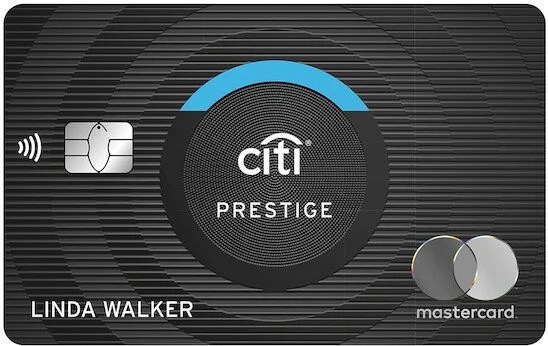
Citi Prestige Mastercard
The Citi Prestige card is no longer offered to new applicants but is still available for the cardholder who held the card before Citi closed applications. The Prestige card is the flagship card for the Citi card lineup and charges a $495 annual fee. As with competitor flagship cards, the Prestige provides many credits and benefits, including a Global Entry/TSA Precheck credit, a $250 travel credit, a PriorityPass lounge membership, and a 4th-night free hotel credit when four consecutive hotel nights are booked through the Citi travel portal.
The Prestige is my go-to card for dining and general travel with a 5x City ThankYou point multiplier in those categories. It also earns 3x points on cruises and hotels and 1x points on everything else. Citi has many transfer partners including Avianca, Air France/KLM, and Virgin Atlantic. I put most of my dining purchases on the card and utilize the 4th-night free benefit.

Capital One Venture X Card
The Capital One Venture X was one of the hottest card products of 2022, with good reason. It is a top-tier card with Priority Pass access, travel protections, a robust travel portal, good transfer partners, and a credit for Global Entry/TSA Precheck. It does have a $395 annual fee, with is significantly less than its primary competitors (the American Express Platinum Card is $695 and the Chase Sapphire Reserve is $550). In my estimation, the card is, for all intents and purposes, free, due to a $300 travel credit through the Capital One travel portal and a 10,000-point bonus after the first year.
The Capital One Venture X card, with an across-the-board 2 points per dollar, is my catch-all card for purchases that don’t earn additional multipliers with my other cards.
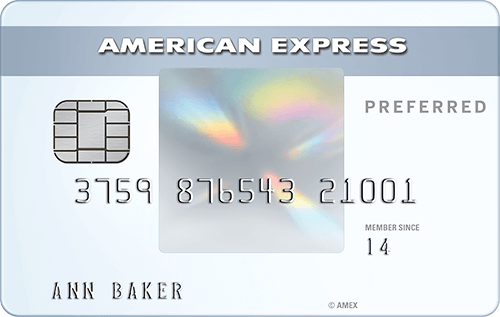
American Express Everyday Preferred Card
The American Express Everyday Preferred card currently comes with a 15,000-point sign-up bonus after $2,000 of spending in the first six months after opening the card. It has a $95 annual fee and earns 3x membership rewards points on groceries, 2x points on gas, and 1x points on everything else. With 30 purchases in a billing cycle, the card gives a 50% bonus on points, resulting in an effective 4.5x on groceries, 3x on gas, and 2x on everything else.
I primarily use the card for gas and grocery purchases and make sure to put at least 30 small charges on the card every month to get the bonus.
With this setup, my effective return on spending, according to the Points Guy’s December 2022 valuations, is as follows:
United Airlines purchases – 3 miles (United Quest card) x 1.21 cents per point = 3.63% back
Delta Airlines purchases – 3 miles (Delta Reserve card) x 1.41 cents per point = 4.23% back
Dining & Other Airline purchases – 5 points (Citi Prestige card) x 1.8 cents per point = 9% back
Grocery purchases – 4.5 points (American Express Everyday Preferred card) x 2 cents per point = 9% back
Gas purchases – 3 points (American Express Everyday Preferred card) x 2 cents per point = 6% back
Everyday purchases – 2 points (Capital One Venture x card) x 1.85 cents per point = 3.7% back
These returns are based upon a maximum utilization which, due to my pursuit of status on United and Delta, I won’t achieve, but they do show what my overall strategy is.
What is your card setup for the next three months? Leave a comment below.
 The Rewards Master